


Newhaven is a town that rewards a closer look. Its working harbour, railway, ferry terminal and river are all part of everyday life, but look beyond the modern port and you'll uncover centuries of stories about the people, industries and events that have shaped this corner of the Sussex coast.
Now, three heritage walking routes invite visitors to explore Newhaven through the eyes of the local people who researched them. Developed by SCDA with local historian Dr Jenny Flood and a team of community volunteers, the Newhaven Heritage Routes reveal fascinating details hiding in plain sight, from the town's railway and maritime industries to wartime history, old pubs, vanished buildings and the characters who passed through the port.
Better still, these walks are an easy way to turn a visit to Newhaven into something more than a quick stop. Whether you're arriving in Sussex on the ferry from Dieppe, heading to France, or simply looking for somewhere different to explore on the coast, allow time to walk, eat, drink and perhaps stay overnight.
Walk one: West Quay and Beyond
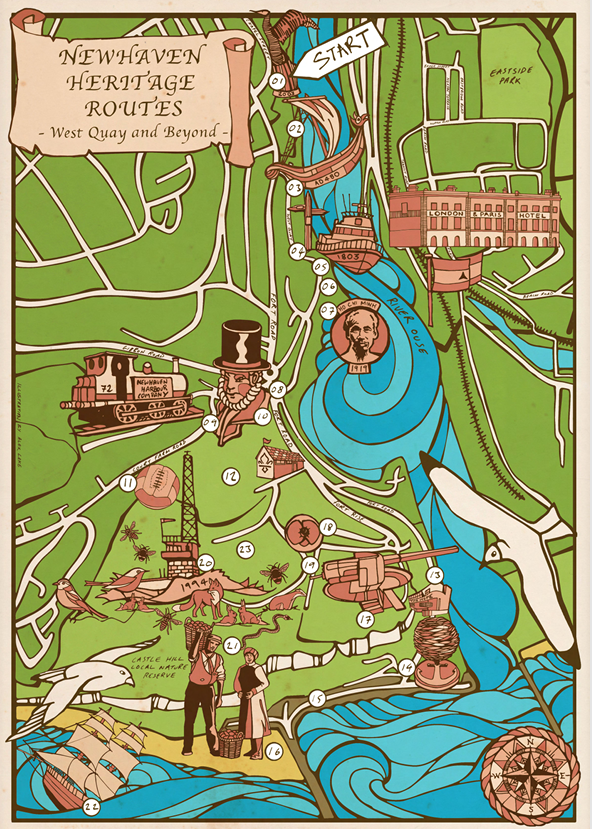 Start beside the River Ouse and follow Newhaven's waterfront on the West Quay and Beyond route. The first section is relatively level and accessible, with benches along the way, making it a relaxed introduction to the town and its maritime past. From here, you can choose whether to continue towards the beach, Newhaven Fort and the surrounding nature reserve.
There is plenty to discover along the waterfront. The River Ouse was once an important transport route, carrying cargo inland long before the railway arrived in Newhaven in 1847. At its peak, the river was navigable as far as Uckfield and beyond, with 19 locks helping boats transport goods including coal, chalk, lime and aggregates. Journeys could take several days, but travelling by water was still quicker than moving goods by horse and cart.
The walk also reveals just how important Newhaven was as a gateway to the continent. Look out for the site of the former London and Paris Hotel, built in 1847 to serve passengers travelling on the ferry to Dieppe. The grand hotel featured a dance floor for 250 people and gardens filled with lilacs. One of its more famous visitors was Wallis Simpson, who stayed there in 1936 while waiting for her ferry and attempting to avoid the press during the abdication crisis.
Further along, you'll encounter stories of Newhaven's lifeboat, fishing industry and wartime connections. The town's first lifeboat arrived in 1803, making Newhaven one of the earliest ports in Britain to have one. You'll also find a memorial to local fishermen beside the river, while the breakwater tells another chapter in the story of Newhaven as an important working harbour.
There are some wonderfully unexpected discoveries too. A small commemorative stone on West Quay marks Newhaven's connection with Ho Chi Minh, who is believed to have worked as a pastry chef on the Newhaven to Dieppe ferry before becoming the communist leader of Vietnam.
If you have time, extend your walk towards Newhaven Fort, the beach and the nature reserve around the harbour. It's a great combination of heritage, fresh sea air and coastal scenery.
Walk two: East Side
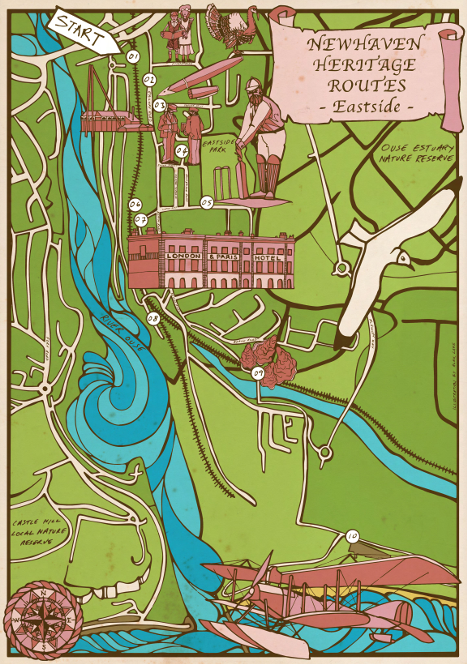
The second route heads into East Side Newhaven, exploring the people, communities and industries that once defined this part of the town. The walk begins at The Sidings, close to Newhaven Town railway station, the ferry terminal and local transport links, making it particularly convenient for visitors arriving by public transport or travelling through Newhaven.
One of the most striking stories here is that of the Marine Workshops. Built in the early 1880s for the London, Brighton and South Coast Railway, the workshops repaired ships, steam-powered cranes and railway engines. During the First World War, Newhaven became a major supply port for the Western Front, and the workshops worked around the clock repairing government vessels. Around 120 men were employed there, with workers averaging 72 hours a week.
The workshops had another important connection with the ferry. After their ship-repair days ended, they were used to maintain the tractor units that hauled trailers from the quayside onto ferries bound for Dieppe. Today, the buildings have been given a new lease of life as the Marine Workshops, home to East Sussex College, Lewes District Council offices and a range of commercial businesses.
Look upwards and imagine the Sheer Legs crane that once dominated Newhaven's skyline. Installed in 1881, the enormous crane stood 105 feet high and could lift 50 tons. It remained part of the harbour landscape for more than 80 years before being dismantled in 1965.
The walk then moves into the heart of East Side, exploring the close-knit community that grew around the docks, railways, factories, schools, shops and pubs. This was a neighbourhood where people could find almost everything they needed close to home. Local memories collected as part of the project bring this history to life, giving the walk a particularly personal feel.
There's even a story behind the area's nickname, "Turkey Town". One popular explanation is that live poultry was imported from Normandy and unloaded at East Quay, with the aroma of roasting turkeys supposedly drifting through the neighbourhood when some of the birds mysteriously disappeared from the docks.
Walk three: Central Newhaven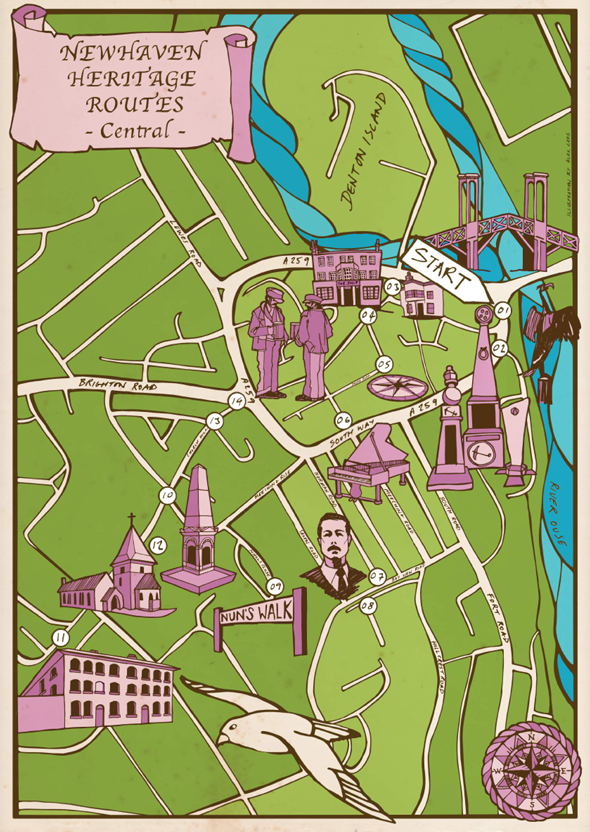
The third route takes you through Central Newhaven, beginning at one of the town's most recognisable landmarks, the Swing Bridge.
There has been a crossing over the River Ouse here for centuries. A ferry was operating by at least 1332, before Newhaven's first bridge was built following an Act passed in 1784. The later swing bridge opened in 1866 and required eight men to operate the mechanism. It also carried a gas line and tramway, and trains once crossed the bridge too.
It's details like these that make the walk so rewarding. Rather than simply passing the river, you begin to see it as the centre of Newhaven's story. The bridge, harbour, railway and movement of ships were all closely connected.
Today, the Swing Bridge is also a good place to spot Newhaven's distinctive Cormorant sculpture, created by local artist Christian Funnell and installed in 2005. The bird has become something of a symbol of the town, reflecting the way nature and Newhaven's busy industrial landscape exist side by side.
From here, the route continues through the town, taking in memorials and historic buildings while introducing the people and events that have shaped Newhaven. Memorial Green includes three important memorials, including one commemorating Merchant Navy personnel who transported supplies and munitions during the First World War and another remembering the Canadian forces lost during the Dieppe Raid of 1942.
This walk is a reminder that Newhaven's connections with the wider world run deep. Its relationship with France is not simply a modern ferry connection. For generations, people, goods and ideas have travelled through this port, making Newhaven a fascinating place to explore if you enjoy discovering the history behind a destination.
Make a day of your Newhaven visit
One of the best things about these walks is that they encourage you to slow down and linger a little longer.
Newhaven is sometimes thought of simply as the place where you catch the ferry, but there are plenty of reasons to arrive early or stay a little longer. After your walk, stop for coffee, lunch or dinner and take time to explore Newhaven's growing food and drink scene. Mamoosh Riverside, close to the ferry terminal, is a popular spot for coffee, artisan baking and Middle Eastern-inspired food, while the Hope Inn offers a traditional pub experience close to the coast.
If you're travelling by ferry, an overnight stay can make the experience even more relaxed. Rather than timing your journey around a sailing and heading straight for the port, stay in or around Newhaven and enjoy an evening by the water before continuing your journey the following day. There are accommodation options in and around the town to suit different types of traveller.
And there's a particularly good reason to build one of these walks into a trip between Sussex and France.
Catching the ferry to or from Dieppe?
If you're travelling on the Newhaven to Dieppe ferry, the heritage routes are an easy way to see more of the town before you sail or after you arrive.
Arriving from Dieppe, you could spend a few hours exploring the harbour and following one of the walks before continuing your journey through Sussex. If you're travelling from Sussex to France, arrive in Newhaven with enough time to wander around town, enjoy something to eat and discover some of the history behind the port before boarding.
It's a particularly fitting way to explore Newhaven because the ferry itself is woven into the town's story. The former London and Paris Hotel once welcomed passengers waiting to cross the Channel, while the Marine Workshops later played a role in preparing vehicles for their journey to Dieppe.
Today, the ferry makes Newhaven an international gateway, with regular crossings connecting Sussex with Normandy. Take a walk through the town and you'll discover that being a gateway has been part of Newhaven's identity for centuries.
Discover Newhaven beyond the ferry port
The three Newhaven Heritage Routes are a chance to slow down and see the town differently. Follow the river along West Quay, uncover the industrial and community history of East Side, or explore the bridges, memorials and landmarks of central Newhaven.
Together, they reveal a side of Newhaven that can easily be missed when you're simply passing through. So next time you're travelling between Sussex and France, leave a little extra time in your plans. Walk the waterfront, uncover fascinating local stories, stop for something to eat and, if you can, stay a little longer.
Find the full details of these three Newhaven Heritage Routes and download the maps from SCDA, then discover more things to do, places to eat and places to stay on our Destination Newhaven page.

